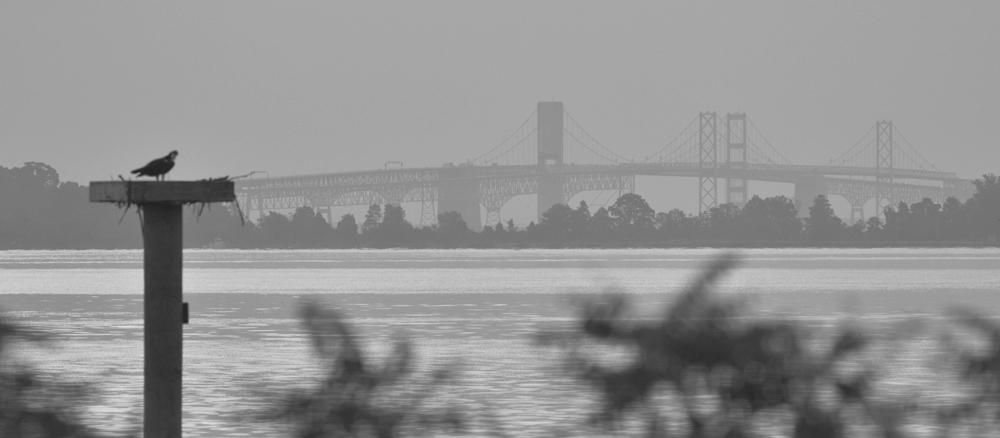
I went back to Sands Road this morning, and it was quite different. I saw very few birds, and didn’t get a single usable image, even after I made a second visit. Weird.
Wooton treated me better, but it was slower than yesterday.
I went back to Sands Road this morning, and it was quite different. I saw very few birds, and didn’t get a single usable image, even after I made a second visit. Weird.
Wooton treated me better, but it was slower than yesterday.
It’s time to start hunting migrants, so I started at Sands Road this morning. It was pretty active, but the fog and clouds prevented really good photography.
I left after a couple of hours, and went to Wooton, which wasn’t as good. but looks promising.
I finished up with a short bug hunt.
I started at Possum Point this morning, but the light was so poor I didn’t get anything worth looking at.
Truxtun Park and Quiet Waters were very slow, but I did find a couple of bugs.
I started out by visiting the heronry in Arnold, which was not as good as last time. There seemed to be fewer nesting herons, also.
Truxtun Park was next, and much more productive. I believe this is the first Swamp Sparrow I’ve seen there.
Quiet Waters was good also, but I’m still not seeing many migrants.
From reports I’m hearing, migration is well underway, so I decided to look for migrants this morning. I started at Sands Road, which was pretty dead, then went to Wooton, which was better, but not really hot.
Tree Swallows and Ospreys were very active, but no significant amount of other visitors appeared.
I found a couple of migrants at Truxtun Park in a brief afternoon trip.
It was a rainy dawn, so I stayed home until 8:30 or so, then went to Possum Point. The usual Osprey and Cormorants were all I saw, and the rain was threatening, so I did some chores and headed home.
The Mourning Cloak is from a brief stop yesterday. Oddly this butterfly has been in the same small area for the last three years.

Wikipedia: Nymphalis antiopa, known as the Mourning Cloak in North America and the Camberwell Beauty in Britain, is a large butterfly native to Eurasia and North America. See also Anglewing butterflies. The immature form of this species is sometimes known as the spiny elm caterpillar. Other older names for this species include Grand Surprise and White Petticoat. A powerful flier, this species is sometimes found in areas far from its usual range during migration. These butterflies have a life-span of 11 to 12 months, one of the most extensive life-spans for any butterfly.
I went to Possum Point for sunrise again, then spent an hour looking for migrants without any luck. I did get some cooperation from the regulars, though.
Beach Road and Jonas Green were nearly deserted, but Quiet Waters as more productive, with Ospreys, Grebes and Wood Ducks. Great weather, also.

The Horned Grebe spends most of its life on the water, even as a chick. Like other Grebes, it can’t walk on land because its feet are so far back on its body. It can only flop and hop which means it can only take off from the water. It is also reported to eat its feathers which can be up to 55% of its stomach contents. Scientists believe the feathers protect the stomach from sharp fish bones that its gizzard can’t handle. The voice of the Horned Grebe is a series of interesting croaks and chattering, followed by a few long shrieks. In the summer you might hear whining. http://www.birdinginformation.com/birds/grebes/horned-grebe/

Cornell: “Bufflehead nest in old woodpecker holes, particularly those made by Northern Flickers, in the forests of northern North America.”

Cornell: ” Common Loons are powerful, agile divers that catch small fish in fast underwater chases. They are less suited to land, and typically come ashore only to nest.”
I tried for more sunrises at Possum Point, and got a couple, then a few gulls and Ospreys, but not much else.
I’d heard there were some gulls at Jonas Green Park, and I found a flock of 30 or so Bonaparte’s Gulls and a warbler.
Quiet Waters is still the best place, so I spent a couple of hours there and got a few decent shots.

“It was morning, and the new sun sparkled gold across the ripples of a gentle sea.” ― Richard Bach, Jonathan Livingston Seagull
I started at Governor Bridge today, in hopes of finding some early migrants, but had no luck at all.
Quiet Waters was my next stop, and it was slow also, but I had about an hour of decent activity. It was warm enough, but very windy, which may have slowed the birds down a bit.
Any image on the site is for sale. If you click an individual image, you’ll get the image number, or you can just say “The second image on the 12 September 14 post, or just email me. (Use the “Comment” link).
Digital Download (Hi-Res) $20.00 These will be emailed.
8 x 10 $30.00
11 x 19 $60.00
Other sizes available on request.