Common Yellowthroat at Wooton’s Landing

Another cold and cloudy Spring day; the kind that makes you wonder if it’s worth going out at all. I really hate seeing a good bird in bad light, but I went anyway.
A few good birds showed up, and the photos are passable, but I wish…

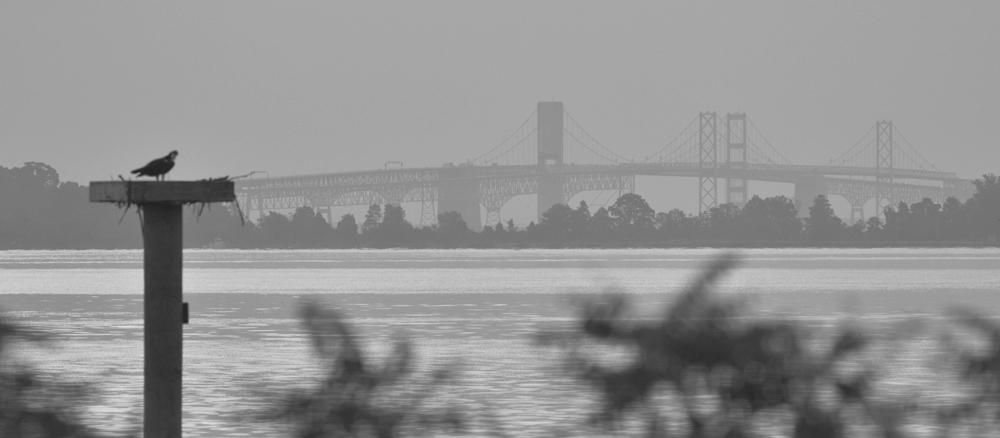
Osprey

The ponds at Wooton are quite small, and an Osprey looks out of place.

Bluebird

There’s a large population of Bluebirds at Wooton.

Great Egret

Great Egret

Great Egret

I haven’t seen many Great Egrets, so this bird was a nice surprise.
Cornell:
“The elegant Great Egret is a dazzling sight in many a North American wetland. Slightly smaller and more svelte than a Great Blue Heron, these are still large birds with impressive wingspans. They hunt in classic heron fashion, standing immobile or wading through wetlands to capture fish with a deadly jab of their yellow bill. Great Egrets were hunted nearly to extinction for their plumes in the late nineteenth century, sparking conservation movements and some of the first laws to protect birds.”

Belted Kingfisher

The Belted Kingfishers at Wooton spook easily and it’s hard to get close.

Goldfinch

This Goldfinch hasn’t finished his Spring molt yet.

Common Yellowthroat

My first Common Yellowthroat of the year.

Great Blue Heron

I saw several Great Blue Herons.

Pileated Woodpecker

This Pileated Woodpecker and his mate were squawking loudly and darting from tree to tree as I arrived.

Warblers and More at Bacon Ridge

With the promise of sunnier weather and an accomplished guide, I decided to go back to Bacon Ridge and see if I could do better. Dan Haas, the AABC led 6-8 people through the Bacon Ridge Preserve and I was able to see many more birds.
The photography was challenging, as the canopy limits the available light, and many of the birds were moving quickly, necessitating the use of hand-held photography, but I’m happy enough with the results.

Ovenbird
Ovenbird

Ovenbird

Cornell:
“A small, inconspicuous bird of the forest floor, the Ovenbird is one of the most characteristic birds of the eastern forests. Its loud song, “teacher, teacher, teacher,” rings through the summer forest, but the bird itself is hard to see.”

Hooded Warbler

Hooded Warbler

Hooded Warbler

This lovely Hooded Warbler was foraging on the forest floor and I was lucky get usable images.

Black and White Warbler

Black and White Warbler

Black and White Warbler

Cornell:
“Distinctive in both plumage and behavior, the Black-and-white Warbler forages for insects while creeping along the trunks and branches of trees. Common in summer throughout the eastern United States and Canada, it has an unusually extensive winter range that extends from Florida to Venezuela and Colombia.”

Worm Eating Warbler

Worm Eating Warbler

Worm Eating Warbler

Worm Eating Warbler

I would never have seen this Worm Eating Warbler without the help of the good birders in our party.

Barn Swallow

Barn Swallow

These Barn Swallows were taking a break.

Cliff Swallow

This Cliff Swallow was hanging out with the Barn Swallows. He’s probably headed North to his breeding grounds

Yellow Rumped Warbler

Yellow Rumped Warblers are not hard to find in the Spring.

Spotted Sandpiper

We saw several Spotted Sandpipers, but they spooked as soon as we got close.

Eastern Meadowlark at Bacon Ridge

There was a sponsored bird walk at Bacon Ridge Natural Area this morning, and I attended. I didn’t do well, but I did come across an Eastern Meadowlark, a bird I haven’t seen in many years. I stopped at Tawes Gardens on the way home and got another look at the resident Red Shouldered Hawk. A later trip to Truxtun Park produced nothing of note.

Barn Swallow
Eastern Meadowlark

Eastern Meadowlark

He was a bit distant, but this Eastern Meadowlark was a nice find.

Northern Rough Winged Swallow

There were three kinds of swallows, including this Northern Rough Winged Swallow


Barn Swallow

Barn Swallow

These Barn Swallows were cruising the containment ponds.

Tree Swallow

Tree Swallows were hunting right alongside the Barn Swallows.

Red Shouldered Hawk

Red Shouldered Hawk

This Red Shouldered Hawk was settling into her nest as I arrived.

Snowy Egret at Terrapin Nature Park

I got out briefly yesterday, but only got a few images, which I’m posting tonight.
I had decided yesterday to go to Terrapin, but the weather was so lousy I almost stayed home.
Clouds and an occasional light sprinkle were discouraging, but I did manage a couple of decent shots.

Deer

Deer have been scarce lately.

White Throated Sparrow

White Throated Sparrow

White Throated Sparrow

White Throated Sparrow

White Throated Sparrow

White Throated Sparrow

I’m not a big sparrow fan, but these White Throated Sparrows look good in breeding plumage.

Snowy Egret

Snowy Egret

Snowy Egret

Snowy Egret

This Snowy Egret probably spent the Winter in Central America.

This Snowy Egret probably spent the Winter in Central America.

Bluebird

Bluebird

This Bluebird was hanging out in Truxtun Park.

Brown Thrasher

Brown Thrasher

This Brown Thrasher was singing loudly for a mate.

Blue Headed Vireo at Truxtun Park

Work is interfering with birding once again, but when people need their computers fixed I have to respond.
I didn’t get started ’til late, and I went to Governor’s Bridge Park because some good birds have been reported there. It was virtually a complete waste of time. I would never have imagined you could walk in such good habitat for nearly two hours without seeing any migrants and barely any small birds at all. A mystery.
I stopped at Truxtun Park on the way home, and did better in the first ten minutes than in all the time I spent at Governor’s Bridge.

Dark Eyed Junco

This Dark Eyed Junco should be heading to Canada to breed soon.

Mallard

This Mallard hen is successfully raising a family.

The Blue-headed Vireo is the easternmost form in the "Solitary Vireo" complex. Formerly considered one species, three species now are recognized. In appearance it is the most brightly colored of the three.

The Blue-headed Vireo is the easternmost form in the "Solitary Vireo" complex. Formerly considered one species, three species now are recognized. In appearance it is the most brightly colored of the three.

Cornell:
“The Blue-headed Vireo is the easternmost form in the “Solitary Vireo” complex. Formerly considered one species, three species now are recognized. In appearance it is the most brightly colored of the three.”

Hermit Thrush

Cornell:
“Males usually gather food for the nest, while females feed the nestlings. The young birds start by eating bits of larvae, then grasshoppers, moths, and spiders. One Hermit Thrush has been seen trying to give a nestling a salamander more than 1.5 inches long.”

White Throated Sparrow

The White Throated Sparrow is another Canadian breeder.

Tufted Titmouse

This Tufted Titmouse was foraging in Truxtun Park.

Bluebird at Patuxent NWR

I awoke to a gray dawn with temps in the 60s and rising. Patuxent NWR opens at sunrise, so I went early to beat the commuter traffic, and saw some nice birds, but with lousy light. Sometimes I think I’d be better off waiting, but I’m a morning kind of guy.
The Bluebird was a nice treat, but I’m still lookin for decent migrants.

Double Crested Cormorant

Double Crested Cormorants are regulars at Patuxent.

Bluebird

Bluebird

You can’t go wrong with a Bluebird in breeding plumage.

Wood Duck

Wood Duck

Wood Ducks continue to cooperate

Palm  Warbler

Palm  Warbler

Palm Warblers are showing up at many sites.

Tree Swallow

Tree Swallow

The skies were filled with Tree Swallows.

Red Shouldered Hawk at Tawes Gardens

Another perfect day, and I set out early to Greenbury/Possum Points. Greenbury continues to disappoint, but an Eastern Towhee saved the day.
I stopped at Tawes Gardens afterward and found some nice birds, including a Red Shouldered Hawk nest and the year’s first Kinglet.
After a nap, I spent a couple of productive hours at Truxtun Park.

Osprey

This Osprey is nesting at Possum Point.

Ruby Crowned Kinglet

Ruby Crowned Kinglets are fun to watch, but hard to photograph.

Blue Headed Vireo

Blue Headed Vireo

Blue Headed Vireo

The Blue Headed Vireo is a neo-tropical migrant. This little guy is just arriving from the southern US or Central America.

Great Black Backed Gull

The Great Black Backed Gull is the largest gull in the world.

White Throated Sparrow

White Throated Sparrow

White Throated Sparrows should be headed North to breed soon.

Mallard

These Mallards were in the garden pond.

Pine Warbler

Pine Warbler

Pine Warbler

Cornell:
“A bird true to its name, the Pine Warbler is common in many eastern pine forests and is rarely seen away from pines. These yellowish warblers are hard to spot as they move along high branches to prod clumps of needles with their sturdy bills. If you don’t see them, listen for their steady, musical trill, which sounds very like a Chipping Sparrow or Dark-eyed Junco, which are also common piney-woods sounds through much of the year.”

Chipping Sparrow

Cornell:
“A crisp, pretty sparrow whose bright rufous cap both provides a splash of color and makes adults fairly easy to identify. Chipping Sparrows are common across North America wherever trees are interspersed with grassy openings. Their loud, trilling songs are one of the most common sounds of spring woodlands and suburbs.”

Yellow Rumped Warbler

Yellow Rumped Warblers are everywhere!

Eastern Towhee

Eastern Towhees don’t often pose so well.

Blue Gray Gnatcatcher

Blue Gray Gnatcatcher

Blue Gray Gnatcatcher

The Blue Gray Gnatcatcher is another fast moving bird who’s difficult to photograph.

Red Shouldered Hawk

Red Shouldered Hawk

This Red Shouldered Hawk has a nest right next to the District Court building.

Spring Warblers are Here!

Another perfect Spring day had me travelling to Patuxent NWR early, followed by a quick afternoon trip to Truxtun Park. It was almost warm enough for shirtsleeves, and the birds were active all day.

Pine Warbler

Pine Warbler

This Pine Warbler has probably just arrived from Texas or Mexico.

Starling

Starlings aren’t popular, but they can be quite attractive in breeding plumage.

Cooper's Hawk

Cooper's Hawk

Cooper's Hawk

I followed this Cooper’s Hawk to three different perches.

Caspian Tern

This Caspian Tern was dining at Lake Reddington.

Eastern Phoebe

Eastern Phoebes have become very common in the last week or so.

Bluebird

Bluebird

Bluebirds are breeding everywhere I go.

Double Crested Cormorant

Double Crested Cormorants are thriving at Patuxent.

Chipping Sparrow

Chipping Sparrow

This Chipping Sparrow may have wintered in the Bahamas.

Barn Swallow

Barn Swallow

Barn Swallow

These Barn Swallows were gathering mud for their nests.

Great Blue Heron

Great Blue Heron

Great Blue Heron

This Great Blue Heron was fishing quietly until I disturbed him.

Canada Goose

The Canada Goose always looks serene.

Osprey

Osprey

Ospreys are busy building and repairing nests.

Pine Warbler

Pine Warbler

I found this Pine Warbler at Truxtun Park.

Palm  Warbler

The Palm Warblers are consistent at Patuxent.

Field Sparrow

I don’t often see Field Sparrows.

Yellow Rumped Warbler

Yellow Rumped Warbler

Yellow Rumped Warbler

Yellow Rumped Warblers are very numerous.

Wood Duck

At least two pair of Wood Ducks are nesting at Patuxent.

Killdeer

Killdeer were unusually active.

Blue Gray Gnatcatcher at Truxtun Park.

The gloomy, rainy day cleared up around 2:00, so I go out to Truxtun Park briefly and found a few birds. I did see a migrating warbler, but wasn’t able to get a usable image.

Blue Gray Gnatcatcher

This Blue Gray Gnatcatcher has just arrived from Central America or the Bahamas.

Osprey

Osprey

Osprey

Osprey

This Osprey has a nest nearby.

Green Heron at Terrapin Nature Park

Unseasonably warm weather has been here for a couple of days, but I can live with it.
I went early to Terrapin Nature Park in hopes of finding some migrating birds, and I found a few, but warblers are still in short supply.

Green Heron

I haven’t seen a Green Heron since the Fall.

Red Winged Blackbird

Red Winged Blackbird

This female Red Winged Blackbird is radically different than her male counterpart.

Green Winged Teal

Green Winged Teal are still present in small numbers.

Wood Duck

Wood Duck

A pair of Wood Ducks is nesting in the marsh pond.

Yellow Rumped Warbler

Yellow Rumped Warbler

Yellow Rumped Warbler

There were many more Yellow Rumped Warblers than usual.

Eastern Towhee

Eastern Towhees continue to be elusive.

Blue Winged Teal

This Blue Winged Teal probably has a nest nearby.

Red Tailed Hawk

This Red Tailed Hawk circled slowly for a long time.